

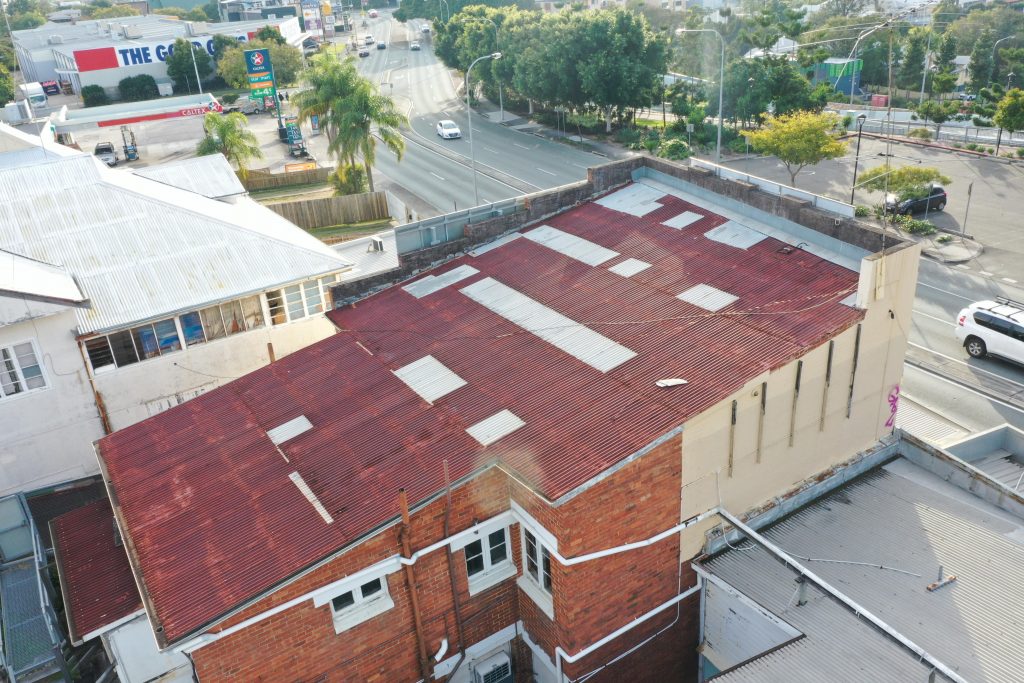
If you’re checking your roof and wondering if it’s time for a replacement, consider a few key factors: its age, visible damage, and any issues inside your home. Some signs are pretty clear, like rust stains on your walls, cracked tiles after storms, a crooked roofline, or moss that seems to have taken over. Others are more subtle, like a gradual increase in your energy bills or a musty smell in your attic that wasn’t there last year. The hard part is that many roof problems can go unnoticed for a long time. By the time you spot water stains on the ceiling, serious damage may have been developing for months or even years.
If you’d rather skip the guesswork and get a clear answer, AMJ Metal Roofing offers roof inspections across Brisbane, the Gold Coast, Sunshine Coast, Ipswich and Toowoomba. Call 1300 12 ROOF to book one.
Warning signs you can see from the ground
You don’t need to climb a ladder to spot the first signs of a roof in trouble. A slow walk around your property with your eyes on the roofline will often tell you more than you’d expect.
Rust, corrosion, or lifting metal sheets
In metal roofing, one sure sign of a broken protective barrier is rust, evident in orange/brown streaking on the fascia or walls under the roofline. Once the protective Zincalume/Colorbond surface is breached, the underlying steel will rust away rapidly and could result in rusty spots all over the roof in just a few years’ time.
Sheet lifting or buckling is another issue with the same urgency. Metal sheets that lift from their fixings are probably caused by rusting or deterioration of the original fixings. As a consequence, there will be openings that allow rainwater to blow through them into the roof. In cases of strong winds, the whole sheet could lift up completely and blow off. Seeing light holes in the sheets means that this roof is beyond simple repair.
A sagging or uneven roofline
Sagging roofs are among the most serious warning signs, since they suggest that there is underlying structural damage within the roof. In cases of roof sags, the source of the problem will always be within the roofing structure, such as water-filled roof battens, rotten rafters, termites, or any combination of the three. While the actual roofing may look fine, the underlying structure will have been compromised.
In these situations, roof replacement cannot wait, since a sagging roof causes extra weight on areas not intended by design. The longer it takes to fix the problem, the greater the repairs required, making the process increasingly costly. If you see an unlevel roof line from the outside, you should call in an expert right away.
Warning signs inside your home
Not all signs that your roof is in need of repair can be seen from outside. There are some indicators that your roof requires maintenance that appear in other areas of the house that you do not look at very often.
Water stains on ceilings or walls
Roof leakages can easily be identified by brown or yellow stains on the ceiling. The surprising part about this is that the location of the stain does not indicate the location of the leak. This is because water moves along battens, then moves downward along rafters to settle on the top side of ceiling sheets, until it finds an opening to fall down into the room.
One small stain appearing in the ceiling following a heavy rain can be a small leakage caused by loose flashings or fixings. However, a repeated appearance of new stains in different locations, or a growing dark stain during every period of heavy rains, can be a widespread issue. Many leaking areas in the roof suggest deterioration of the structure to a point where patching individual spots won’t hold for long.
Damp insulation or musty smells in the roof cavity
If you poke your head up into the roof cavity and detect a damp smell, there is moisture in places that it should not be. Wet insulation is ineffective and also acts as a perfect medium for mould growth. In the humid conditions in Queensland, even relatively minor roof leaks will make their way through the roof insulation material over just a few seasons of being wet.
Inspect the insulation material for signs of moisture penetration. You can tell if this occurs by touching the insulation to determine if it is heavier than usual, or by checking the appearance and looking for any signs of dark spots indicating the presence of water. Usually, such issues are difficult to identify because the majority of people do not check their roof cavity regularly. However, once they smell that musty smell in their homes, chances are that the insulation is severely affected, and the timber framework around the insulation is deteriorating as well.
When the roof is eventually replaced, installing new roof insulation at the same time is one of the most effective ways to restore thermal performance and prevent future moisture problems.
Rising energy bills with no change in usage
Your roof might have a much greater impact on your energy efficiency than you think. Once the roofing system stops being efficient in reflecting the heat and protecting from the weather, the AC must work harder to maintain the current temperature inside the home. And if you have seen an increase in energy expenses without changing your consumption, chances are that it might be due to problems in your roof.
This is quite common among old metal roofs, which tend to become less reflective because of oxidation, or among tile roofs, where broken tiles create gaps that allow hot air into the space. Wet insulation will also cause inefficiencies. A modern Colorbond roof with insulation installed below it will result in considerable savings, especially in summer in Brisbane.
Moss, mould, or algae growth on your roof
If you see green or black patches on your roof, it’s not just a cosmetic issue. Moss and algae can trap moisture against the roofing material, leading to potential mould growth. This constant dampness can really speed up deterioration. When it comes to concrete tiles, the roots of the moss can penetrate the surface, which might cause cracking. On older metal roofs, the moisture trapped under the moss or algae can wear down protective coatings more quickly than normal weather would.
You might notice dark streaks running down your roof, too. That’s usually algae. This is especially common on south-facing sections that don’t get much direct sunlight and tend to stay damp longer after it rains. Moss often builds up in valleys and around areas where debris collects.
While you can have them cleaned off, if they come back quickly, it indicates that the protective layer of your roof has worn away. At that point, your roof may not have much time left.
How your roof’s age affects the decision
The age of your roof alone does not determine whether it requires replacement. However, it will help narrow down the possible issues and set reasonable expectations for its remaining lifespan.
Expected lifespan by roofing material
Roofs made of different materials have different life spans, and the figures you might read about them are the best cases that assume correct installation and maintenance have been carried out.
Roofs that are made of Colorbond and Zincalume metals are supposed to last 40 to 70 years based on the type of material, profile and coating used, and the amount of exposure to the salty air or industrial pollution. In this regard, Colorbond roofs installed properly in a typical suburb area in Brisbane would survive longer than those installed on the beachside in the Gold Coast, because the exposure to the salty air would reduce their life span by a considerable margin.
The estimated life span of concrete tiles is 30 to 50 years, while that of terracotta tiles is between 50 to 75 years. However, the waterproof coating on the concrete roof tiles degrades long before the roof tiles themselves fall apart. You can read more about how Colorbond compares to concrete tiles to understand which material suits your next roof.
Why older roofs can fail without visible symptoms
Many homeowners often don’t realise the issues that can lurk with an aging roof. From the ground, a roof might seem to be in good shape, but the unseen parts may already be deteriorating. One of the most frequent problems lies with the fixings. Roofing screws and nails can start to rust from underneath, where moisture builds up. So, even if a screw looks perfectly fine from the top, it might have lost much of its strength. This becomes particularly concerning during storms, where high winds can easily lift the roof sheets if those fixings are compromised.
Additionally, the sarking, which is the layer that reflects heat beneath the roof sheets, tends to break down over time. Older sarking, especially that installed before the mid-1990s, can become brittle and tear. Once it fails, any water that gets through the roof sheets can quickly reach the ceiling and insulation below.
Another concern for roofs older than 30 years is the condition of timber battens. They may suffer from dry rot, termite damage, or simply split over time. These issues are usually hidden unless you’re up in the roof space looking directly at them. Even if the roof seems to be keeping out the rain, the support structures can be weakening without anyone noticing.
This is exactly why a professional roof inspection is worth doing on any roof over 20 to 25 years old, even if you can’t see any obvious signs of trouble from the ground.
Repair or replace: how to decide
It comes down to two things: how much will have to be spent in repair costs within the next five years, and the risks that are being taken in that period. Targeted repairs make sense in cases where there is an isolated issue. The replacement of an entire roof becomes viable when the cost of repair begins to approach the cost of doing it right.
When targeted repairs still make sense
In the case of localised damage and everything else being fine with the roof structure, a localised repair would help extend the lifespan of your roof by several years. Common examples of this could involve repairing some of the damaged sheeting, re-bedding/re-pointing of ridge capping, replacement of damaged flashings on one of the penetrations or repairing any single specific area where water accumulation led to leakage.
The important factor here is that everything else on the roof should be in excellent shape. In the case of localised repairs being performed in six-month intervals for different parts of the roof, you are well past a stage where the repairs make financial sense. AMJ’s metal roof repair service can help you determine whether a targeted fix will hold or whether the damage is too widespread.
The 30% rule for replacement cost
An industry standard test for when to replace your roof: if repairs cost more than 30% of what a total roof replacement would cost, go for a replacement. This is because a complete replacement means you get a completely new roof that comes with a warranty from the manufacturer (valid up to 25 years for Colorbond roofing) and a warranty for the installation itself. Any repair will not restart any warranty period, and the roof will continue to age and require additional repairs in the very near future.
If the cost of a total replacement of your roof was $18,000, and the quote for repairs was $5,500 or more, the money would be much better placed going into getting a new roof that would last several decades than fixing an old roof that would likely need to be repaired in just a few years. Even though the total replacement cost may be higher, when calculated on a yearly basis, the cost difference between a total replacement and repairs over the next 40 or 50 years is significant. For a detailed breakdown of what influences pricing, see our guide to roof replacement costs.
Why frequent repairs often cost more than replacing
In every repair, there is always a minimum call-out charge, scaffolding or edge protection set-up charges, and labour. If you are spending twice (or three times as much) on roof repairs within a year, imagine how expensive that is. Within a period of five years of repairing your roof regularly, most homeowners realise that they have spent almost as much as having a complete replacement, yet their roof is outdated.
There is also an added expense of the damages that result from the repair process. Leaks that occur result in insulation damage, timber damage, ceiling damage, or even electrical wirings. The extra repairs, such as ceiling replastering, insulation replacement, and timber treatment, are not included in the quotation of your roof and are a consequence of continuing to keep an inferior roof.
What a professional roof inspection actually involves
An inspection at AMJ starts with a walk-around of the premises to examine the observable parts of the roof, which includes the state of the sheets or tiles, the guttering and fascia, the alignment of the roofline, and whether there have been any prior repairs.
The inspection continues to the roof itself. This involves examining all roof penetrations (vent pipes, skylights, TV aerials, and air-conditioning units), along with their flashings. This is followed by an inspection of the ridge capping, valley irons, and box gutters. Fixings are inspected by sampling a selection of fixings from various parts of the roof. Finally, the underside of the roof sheets is examined from inside the roof cavity, observing any corrosion or gaps, as well as water tracking.
Inside the roof cavity, the inspection is carried out on the condition of the battens, sarking, insulation, and timber frame. It is in this section that any underlying issues arise, including corroded fastenings, moisture-laden insulation, deteriorating sarking, or structural damage due to termites.
A detailed report will provide information on the state of the roof, the actions required, and what can wait for future evaluation. Should there be a need to replace the roof, the report provides a comprehensive overview of the task at hand to help make the right decision instead of assuming based on surface appearances. AMJ offers this inspection across South East Queensland. There’s no obligation to proceed with any work.
Why Brisbane’s climate accelerates roof deterioration
The climate in South East Queensland is tougher on roofs than many homeowners know. This area sees harsh ultraviolet rays, stormy seasons, high humidity levels, and for those near the sea, salty air. These are conditions that reduce the life span of roofing materials, compared to other areas in Australia where it is less humid and cooler.
The first thing is ultraviolet rays. On average, Brisbane has more than 280 days of sunshine each year, and the UV index is always at ‘extreme’ levels during summer. Long exposure to ultraviolet radiation results in the breakdown of the protective coating of metal roofs, while on concrete tile roofs, the ultraviolet rays cause damage to the surface glazing.
The storm season makes things worse. From October to April, when the region experiences extreme weather conditions with rain, hail, strong winds, and even supercell storms, an old roof that has been worn out due to years of UV exposure will suffer greater damage compared to a new roof. Hail breaks fragile roofing materials such as tiles and metal sheets. The damaged parts make the roof less capable of channelling water. Strong winds blow off sheets that are not firmly fixed due to corrosion. And there’s plenty of rain that hits the roof during a sub-tropical storm. If your roof has been damaged during a recent storm, AMJ also handles storm damage and insurance repairs to help you get things sorted quickly.
Meanwhile, humidity acts like a silent danger. Relative humidity in Brisbane averages between 50% and 70%all year round, and increases above 80% in the wet season. The humidity helps the growth of moss, algae and mould on the roof and under metal sheets in the roof cavity through the condensation process that ultimately leads to rusting. One of the most common sources of metal sheet roof failure in South East Queensland happens due to rusting caused by condensation within the roof cavity.
Salt corrosion becomes a problem for properties located on the Gold Coast, Sunshine Coast or within a few kilometres radius around the coastline in general. Salt corrodes metal surfaces continuously, and Colorbond sheets do not last longer near the coast than inland Brisbane locations. Warranty coverage from BlueScope takes into account the distance from the coastlines when deciding coverage periods.
All these things combine into one. A roof that is expected to survive up to 50 years in Melbourne would have to be replaced after just 35 or 40 years. Beach houses on the Gold Coast would experience such deterioration much faster, within the period of about 25-30 years. It goes without saying that if your roof was built in the late 80s or in the 90s and never examined by a specialist, it has been actively affected by the local climate all these years.
What to expect when replacing an old roof with metal
Replacing an existing roof with Colorbond or metal roofing is the most common job AMJ handles. Whether you’re coming from tiles or fibro (asbestos cement), as well as older metal roofs that have reached the end of their life, the process follows a clear sequence, but the details change depending on what’s currently on your home.
Switching from tiles or asbestos to Colorbond
The process of converting from tile to metal is not merely replacing the roofing material. Tiles are heavy materials, weighing about 50 kg per square metre. The battens underneath can only carry the weight for which they were designed. Metal roofs, on the other hand, weigh much less (about 5 to 6 kg per square metre), meaning that they will most likely need new battens installed.
The old tiles are stripped off, the condition of the framework is checked for signs of wear and tear (such as rot, termites, or splitting), and if necessary, the damaged parts are replaced. Then the new battens, sarking, and Colorbond sheets can be fitted. The outcome of such a roof replacement will be a structurally superior and lighter roof, with a greatly reduced chance of cracking or shifting during the storms of South East Queensland. You can learn more about this process on our Colorbond roofing page.
The removal of an asbestos roof is subject to a more stringent procedure. The material known as asbestos cement sheeting (“fibro”) is widely used on Queensland properties constructed prior to the mid-1980s. A licensed asbestos removalist will perform the demolition according to all safe work procedures: they must dampen the asbestos; carefully remove it (leaving it intact), package and seal it, and then dispose of it off-site at a certified facility. All of these steps are coordinated by AMJ, so you won’t be left dealing with multiple contractors.
Once the asbestos sheeting is properly dismantled, the procedure resembles that of a tile roof conversion: inspection of the framework, installation of new battens if needed, laying of new battens, sarking, insulation and roofing tiles, which is to say, the new Colorbond roof sheets. Most people can hardly recognise their own house after this kind of renovation. The old fibro roof, uninsulated, gives way to a roof that is now insulated with new Colorbond tiles and a completely new look and feel.
For a breakdown of what this type of project costs, see our guide to asbestos roof removal and replacement costs.
Council approval requirements in Queensland
The issue of obtaining council approval to replace the roof in Queensland will depend on the nature of the job. Like-for-like roof replacement (same roofing material, no alteration to the roof height or size) would usually be considered exempt or self-assessment work and not require an application for development.
If the nature of the work requires you to install a different roofing material (for instance, replacing tiles with metal sheets) or involves changes to the structure of the roof frame, the regulations could vary based on the council that oversees your property. If the change of materials has a direct impact on the visual appeal of the roof, some councils classify it as assessable work, especially if the property is located in a heritage overlay or character area.
The AMJ team will deal with the council side as part of the project. Prior to commencing the work, we check what permissions may be needed for your particular building, and handle that application if necessary. It’s not something you need to worry about figuring out by yourself. In a regular residential re-roof on a suburb in Brisbane, the process itself (should it even be required) won’t delay the schedule very much. However, it needs to be done before demolition takes place.
Book a roof inspection with AMJ
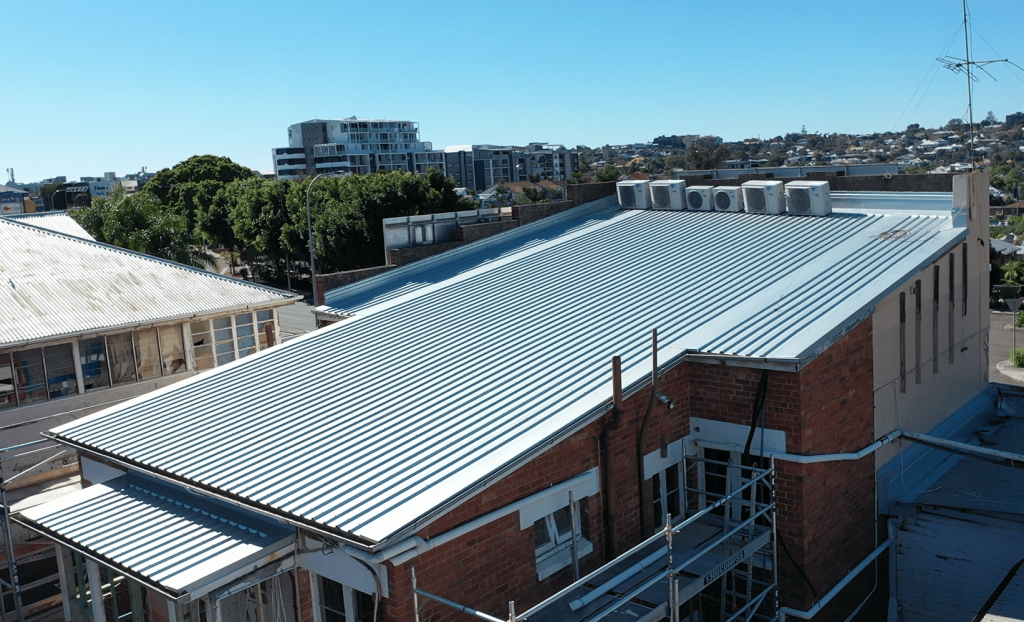
The fastest way to sort out this issue is a quick inspection in 30 minutes that will include the roof itself, the cavity, and the structure beneath.
AMJ Metal Roofing provides roof inspections free of charge and with no obligation for South East Queensland residents. You will receive a report with a complete analysis of the condition of your roof and a recommendation for action. Having worked on over 7,000 re-roofs in Brisbane, AMJ Metal Roofing possesses QBCC licenses and provides 10-year workmanship warranty on every full replacement.
Call 1300 12 ROOF (1300 127 663) or fill in the form to book your inspection.
FAQs
How long does a metal roof last compared to tiles?
Colorbond Metal Roofs usually have a lifespan of around 40 to 70 years, depending on location and coating used. Concrete tiles can have a lifespan of 30 to 50 years, although the water-resistant coating usually degrades far earlier than the tiles themselves. Terracotta tiles have a lifespan of 50 to 75 years, but can deteriorate over time. In the South East Queensland region, metal roofs will outlast tiles due to their greater resistance to UV, storms, humidity, and salt air.
Can I replace a tiled roof with metal roofing?
Yes, it’s one of the most popular services we offer at AMJ. The steps involved are taking out the tiles, checking and repairing the battens and timber structure, and then fitting new sarking, insulation, and Colorbond metal. The new roof will weigh much less than the previous tiled roof, meaning there is less weight for the walls and foundations to support. Typically, the conversion of a typical house will take about a week to ten days.
How much does a full roof replacement cost in Brisbane?
Complete roof replacement in Brisbane usually costs between $25,000 and $35,000 for an average-sized residential building. The actual cost of roof replacement will be dependent upon factors such as roof area, roof slope, penetrations and hip areas, difficult access, need for asbestos removal, and the selection of Colorbond profile and colour. AMJ will give you a comprehensive quote after the complimentary inspection.
Do I need council approval for a roof replacement in Queensland?
Not if you’re just replacing the roof using the same material. Most councils in Queensland do not require council approval when replacing the roof with the same material and maintaining the same roof structure. However, if you want to change the material of the roof or its structure, council approval may be required based on the applicable planning scheme of the council where the property is located. AMJ conducts a pre-replacement assessment to confirm the requirements.
Does AMJ offer a warranty on roof replacements?
Yes, AMJ offers a ten-year warranty on roofing services for full roof replacements, and this is a warranty on our workmanship. Additionally, there is the manufacturer’s warranty provided by BlueScope Steel for up to 36 years on all Colorbond and Zincalume roofs. The warranty will cover issues related to manufacturing defects, corrosion, flaking, chipping, and colour fading. The duration of the manufacturer warranty varies depending on the selected product and colour, as well as proximity to the coastline.
What happens if asbestos is found during the replacement?
If asbestos is detected, asbestos removal must be done according to Queensland workplace safety rules through a licensed asbestos removalist. This is done by AMJ. in collaboration with a licensed asbestos removalist as a part of the whole process. You do not have to arrange for asbestos removal separately.


