

 If your tile roof is cracking and leaking, or just looking tired, you’re in the same position as thousands of homeowners across Brisbane and South-East Queensland. Replacing old concrete and terracotta roof tiles with Colorbond steel is one of the most popular roof replacement jobs in the region, and for good reason.
Changing a tile roof to Colorbond isn’t just a cosmetic upgrade. It’s a structural improvement. Your home gets lighter, your roof becomes more weather resistant, your maintenance drops close to zero, and in many cases the property looks decades newer from the street.
A.M.J Metal Roofing has completed over 7,000 re-roof projects across Brisbane, the Gold Coast, Sunshine Coast, Ipswich, and Toowoomba. A large proportion of those involve replacing tile roofs with Colorbond. We know what’s involved, what it costs, and why most homeowners wish they’d done it sooner.
Call 1300 12 ROOF (1300 127 663) for a free onsite inspection and quote, or request a quote online.
The Weight Problem with Tile Roofs
This is the single biggest reason homeowners switch from tiles to Colorbond, and it’s the one that surprises most people. A concrete tiled roof on an average-sized house weighs around 12 tonnes. A Colorbond steel roof on the same house weighs roughly 1 tonne. That’s a ratio of approximately 10 to 1.
That weight sits on your rafters, walls, foundations, and footings every day, year after year. Over decades, 12 tonnes of dead load creates stress that shows up as wall cracks, sagging timber framing, doors and windows that no longer close properly, and uneven floor levels in some cases. In older Brisbane homes built in the 1970s and 1980s, these signs are common, and the tile roof is almost always a contributing factor.
Replacing roof tiles with Colorbond removes that burden immediately. Walls stop being pushed outward and timber framing recovers to some degree. The risk of future structural damage from roof weight drops as well.
Why Tile Roofs Fail in Queensland
Tile roofs have been used on Australian homes for more than 70 years. They were the dominant roofing material through the post-war building boom and right through to the 1990s. Concrete tiles are the most common type, with terracotta tiles being the second most popular.
Both tile types can last a long time with regular maintenance. Concrete tiles can reach 60 years under optimal conditions. Terracotta roof tiles have a lifespan of about 75 years with proper upkeep. The catch is that most homeowners don’t maintain their tiled roof to the standard required, and Queensland’s subtropical climate accelerates the deterioration.
How The Queensland Climate Attacks Tile Roofs
Thermal Cycling
Brisbane’s summers push roof surface temperatures well above 60°C during the day, then temperatures drop sharply overnight. Concrete tiles expand and contract with each cycle. Over years and decades, this causes hairline cracks that eventually allow water penetration.
Storm Damage
SEQ sits in one of Australia’s most active storm corridors. Hail cracked tiles and high winds dislodge ridge capping. Heavy rain then drives water through joints that have shifted over time. A single severe hailstorm can turn an ageing tile roof from functional to leaking.
Moss & Debris
Brisbane’s humidity encourages moss and lichen to colonise tile surfaces, particularly on south-facing sections that stay damp longer. Organic growth retains moisture against the tile, speeding up surface degradation. Fallen leaves and debris collect in tile valleys and behind ridge caps, blocking water flow and creating new leak paths.
Mortar Deterioration
Ridge capping and bedding mortar breaks down over time, especially in Queensland’s heat. Re-pointing and re-bedding are recurring maintenance costs on tile roofs. Once the mortar cracks, wind-driven rain enters the roof cavity through the gaps.
Foot Traffic Damage
Tiles crack under the weight of tradespeople walking on the roof. Every time a plumber, antenna installer, solar panel technician, or air conditioning contractor accesses the roof, there’s a risk of broken tiles. Those cracked tiles often go unnoticed until the next heavy rain reveals a new leak.
When a concrete tiled roof has been left in a porous state for many years, the tiles become brittle and break easily underfoot. When a terracotta roof reaches the “fretting” stage, where tiles crumble back into clay, the roof is no longer safe to walk on and the entire roof surface needs replacing.
The Advantages of Colorbond Over Tiles
Weight and Structural Relief
As covered above, the weight difference is dramatic. A Colorbond steel roof is approximately 90% lighter than a concrete tiled roof. That reduction removes ongoing stress from rafters, walls, and foundations. On older homes where structural movement has already started, switching to Colorbond can halt the progression of wall cracks and timber sagging.
Durability in Harsh Australian Weather Conditions
Colorbond steel has been tested to last up to 70 years under Australian conditions. It does not crack, chip, shatter, or dislodge under hail or falling branches the way tiles do. The steel is coated with multiple protective layers, including a zinc-aluminium alloy and a baked-on colour finish, making it weather resistant and corrosion resistant even in Queensland’s subtropical environment.
For coastal properties on the Gold Coast or Sunshine Coast, Colorbond Ultra provides additional protective coatings against salt spray corrosion. Our Colorbond vs Zincalume comparison covers the differences between the two most popular metal roofing options.
Low Maintenance
A Colorbond roof requires very little maintenance compared to a tiled roof. The smooth, non-porous surface resists moss, lichen, and organic growth. Regular rainfall does most of the cleaning work. The only upkeep needed is periodic washing with clean fresh water and keeping gutters clear of leaves. An annual roof inspection to check flashings and fasteners rounds out the maintenance schedule.
Compare that to a tile roof, which needs re-pointing of ridge capping, replacement of broken tiles, clearing of debris from valleys, and periodic restoration or repainting (concrete tiles only). Tile roofs require more maintenance, and the cost of that maintenance compounds over the decades.
Better Insulation and Thermal Efficiency
Tile roofs rely on their heavy thermal mass for insulation. They absorb heat during the day and radiate it into the roof space through the evening. While sarking beneath tiles provides some thermal protection, it’s limited.
A Colorbond roof with an insulation blanket installed directly underneath performs better. The insulation blanket stops heat at the roof surface before it enters the roof space, and lighter-coloured Colorbond roofing with Thermatech solar reflective technology reflects a significant portion of the sun’s heat away from the home. In a Queensland climate where air conditioning runs through five or six months of the year, the difference in thermal efficiency translates directly to lower energy bills. Heating and cooling can account for up to 50% of energy used in Australian homes, so the roof’s thermal performance is a genuine factor in your running costs.
We recommend adding roof insulation during every tile-to-Colorbond conversion. It’s far cheaper and easier to install while the roof is already being replaced.
Low Pitch and Flat Roof Suitability
Tile roofs require an adequately pitched roof angle to avoid leaks. On lower-pitched roofs, tiles pool water at the overlaps, and that water eventually works its way through to the battens. Over time, the battens deteriorate from constant moisture exposure.
Colorbond roofing can be installed on low pitch and flat roofs without these issues. The interlocking sheet profiles create a tighter seal than individual tiles, and water runs off faster due to the smooth steel surface. If your home has a low-pitch section, Colorbond is the more suitable roofing option.
Fire Resistance
Colorbond steel is non combustible and rated for use in bushfire-prone areas. Tile roofs are also fire-resistant, but the mortar joints and timber battens beneath them are vulnerable points. A Colorbond roof with compliant sarking underneath provides strong fire protection for homes in fire-risk zones across South-East Queensland.
Rainwater Quality
If you collect rainwater from your roof, Colorbond is the better choice. The painted steel surface doesn’t leach contaminants into the water supply. Concrete tiles, on the other hand, can release calcium and other minerals into collected rainwater, and tiles colonised by moss or lichen introduce organic matter. Homes with rainwater tanks benefit from cleaner water when the roof is Colorbond.
Street Appeal and Property Value
A new Colorbond roof with 22 available colours and modern profiles can dramatically improve the look of a home, often making it appear decades newer than it is. Many buyers view a Colorbond roof as a low maintenance, modern feature and factor it into their assessment of a property’s value.
Older tile roofs, especially those with faded concrete tiles or fretting terracotta, signal ongoing maintenance costs to prospective buyers. Replacing a tired tiled roof with a new Colorbond roof is one of the most effective ways to lift street appeal before selling. Read our article on how a new roof can add value to your home for a detailed look at the numbers.
How Much Does It Cost to Replace a Tile Roof with Colorbond?
For an average-sized home in South-East Queensland, replacing a tile roof with Colorbond costs roughly $25,000 to $35,000 for a metal-to-metal equivalent job. Tile removal jobs push the cost higher than a straightforward metal-to-metal re-roof due to the heavier labour involved in stripping tiles, disposing of them, and the potential need for batten replacement or structural work.
For a mid-sized home of 150 to 200 m², expect a total cost of $30,000 to $45,000+ when converting from a tiled roof to Colorbond. The final cost depends on roof size, pitch, complexity (number of valleys, hips, and penetrations), site access, and whether the existing roof framing needs repair or reinforcement.
On average, standard Colorbond corrugated roofs will be roughly the same price per square metre as standard concrete tile roofs for materials alone. The big savings from Colorbond come over time: lower maintenance, less maintenance-related call-outs, better insulation reducing air conditioning costs, and a longer interval before the next roof replacement.
What Happens During a Tile-to-Colorbond Conversion?
If you’ve never been through a re-roof, the process follows a clear sequence when A.M.J Metal Roofing replaces a tile roof with Colorbond.
Inspection and Quote
We carry out a onsite roof inspection, assess the condition of the tiles, roof framing, and structure, and provide a detailed written quote. If council approval is needed (see below), we flag that at this stage.
Scaffolding and Site Preparation
Scaffolding goes up around the house and skip bins are delivered for tile disposal. Materials are staged on site and the property is protected with ground coverings to catch debris during tile removal.
Tile Removal
The entire roof surface is stripped. All concrete tiles or terracotta tiles are removed and loaded into skips for disposal. Old tiles are sent to recycling where possible; concrete tiles are often crushed and reused as road base.
Structural Assessment and Batten Replacement
With the tiles off, we inspect the roof framing. Worn or damaged rafters are repaired or replaced. Old timber battens are removed and new metal battens are fitted at specified centres to suit the new Colorbond roofing profile. Tile roofs use closer batten spacing than metal roofs, so re-battening is part of the conversion.
We also address tie-downs at this stage. When you change from a heavy tile roof to a lightweight Colorbond roof, the building code requires that tie-down systems be re-assessed. A heavy tile roof resists wind uplift through sheer weight. A lightweight metal roof doesn’t have that mass, so it needs adequate mechanical tie-downs connecting the roof to the walls and the walls to the foundations. Replacing tile roof with Colorbond tie down compliance is a detail many roofing companies overlook, but it’s a building code requirement and A.M.J addresses it on every conversion.
Insulation Installation
An insulation blanket (sarking) is laid across the battens before the new roofing goes on. This provides thermal insulation and acoustic dampening, plus a secondary moisture barrier beneath the Colorbond sheets.
Colorbond Installation
New Colorbond steel roof sheets are laid, fastened, and sealed. Flashings, ridge capping, valley irons, and all penetration flashings (for vents, flues, skylights, and solar panels) are installed. New gutters and downpipes complete the roof system. Roof ventilation (whirlybirds or powered vents) is installed at this stage if included in the scope.
Final Inspection and Handover
We inspect the finished roof, clean up the site, and hand over warranty documentation. Every full roof replacement from A.M.J includes a 10-year written workmanship warranty and the BlueScope Steel manufacturer warranty up to 45 years on eligible Colorbond products.
A typical house re-roof (tile to Colorbond, single storey) takes approximately one week including scaffolding setup and removal.
Do You Need Council Approval to Replace a Tile Roof with Colorbond in Brisbane?
Yes, in most cases. Re-roofs that exceed 20% of the total roof area require development approval from Brisbane City Council. A full tile-to-Colorbond conversion will always exceed that threshold.
A.M.J handles the approval requirements as part of the project. We advise you during the quoting stage on what’s needed and build the timeline into the project schedule.
For minor roof repairs that stay under the 20% threshold, council approval is not required.
Concrete Tiles vs Terracotta Tiles: Does It Affect the Decision?
Both concrete tiles and terracotta tiles reach a point where replacement is the smarter option. The triggers are slightly different.
Concrete Tiled Roofs
These last at least 30 years and up to 60 years under optimal conditions. The surface coating fades and wears over time, making the tile porous. Porous concrete tiles absorb water, which adds even more weight to an already heavy roof and accelerates cracking during thermal cycling. A concrete tiled roof that hasn’t been painted or restored within 20 years is usually approaching the end of its effective life.
Terracotta Roof Tiles
Last longer than concrete (around 75 years) and they never fade because the colour runs through the clay. Their main failure mode is fretting: the tiles crumble and break apart over time, returning to raw clay. A fretting terracotta roof is not trafficable, and individual tile replacement is often impossible because matching profiles are no longer manufactured. At this stage, full roof replacement is the only option.
Both tile types are heavier and more maintenance-intensive than Colorbond, and they become more vulnerable to storm damage as they age. Whether your tiled roof is concrete or terracotta, the advantages of converting to Colorbond are the same. Our Colorbond roof vs concrete tiles guide and metal vs tile roof comparison go deeper on the material differences.
Why Choose A.M.J Metal Roofing for Your Tile-to-Colorbond Conversion?
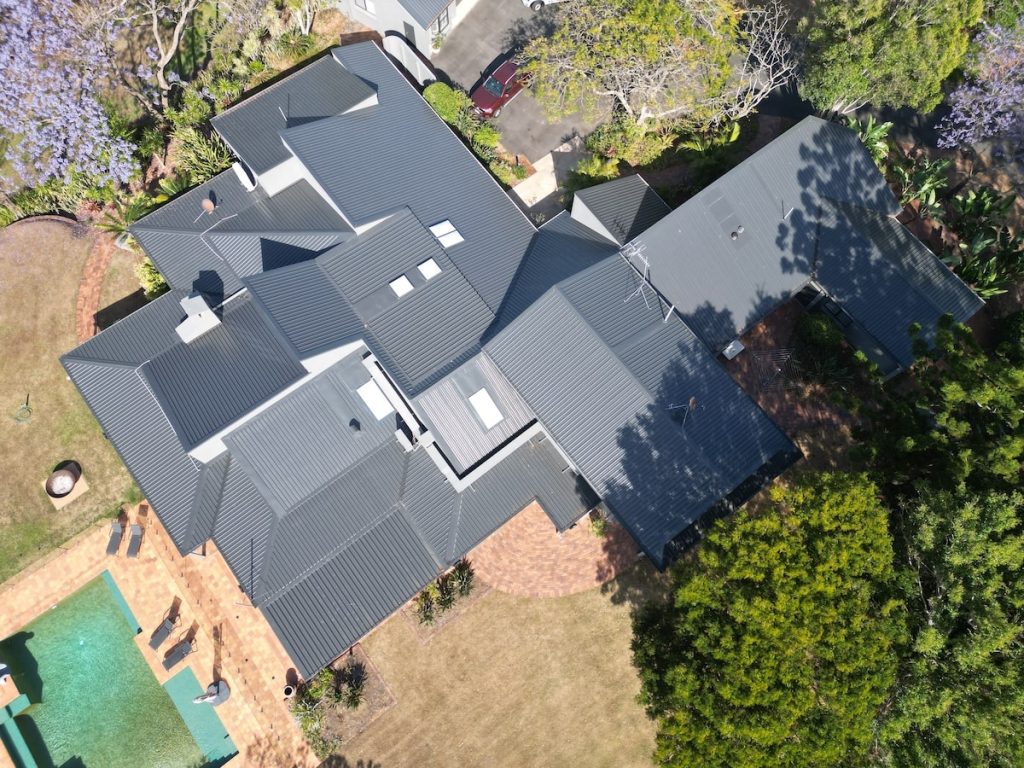
A.M.J Metal Roofing is one of the most experienced Colorbond roof installers in South-East Queensland. Our track record on tile-to-Colorbond conversions is backed by:
- 7,000+ re-roof projects completed across Brisbane and SEQ
- 4.8-star Google rating from verified homeowners
- QBCC Licence 120 2330 | NSW Licence 266396C
- 50+ years combined experience across our team
- 10-year written workmanship warranty on full roof replacements
- BlueScope Steel manufacturer warranty up to 45 years on eligible products
- Full compliance with building code tie-down requirements on every tile-to-Colorbond conversion
- Free onsite roof inspections with a detailed written quote
Whether your concrete tiled roof is cracking and leaking or your terracotta roof is fretting and past the point of restoration, A.M.J manages the full conversion process from inspection to installation to warranty handover.
Ready to replace your tile roof with Colorbond? Call 1300 12 ROOF (1300 127 663) or request your free quote online.
FAQs About Changing a Tile Roof to Colorbond
Can you replace a tile roof with Colorbond?
Yes. It is one of the most common roof replacement jobs in Australia. The process involves removing the entire tile surface, inspecting and re-framing with new metal battens, installing insulation, and laying new Colorbond steel roof sheets. The roof framing may need repair if the heavy tiles have caused wear over the years, and tie-downs must be re-assessed to meet building code requirements for the lighter roofing material.
How much does it cost to replace a tile roof with Colorbond?
For an average-sized home in South-East Queensland, expect to pay $30,000 to $45,000+ for a full tile-to-Colorbond conversion. The cost depends on roof size, pitch, complexity, site access, and the condition of the existing roof framing. A.M.J provides fully itemised quotes after every onsite inspection so you can see exactly what’s included.
How long does a tile-to-Colorbond conversion take?
A standard single-storey re-roof takes approximately one week including scaffolding setup and removal. Larger homes, two-storey properties, or roofs with complex layouts may take longer. A.M.J schedules every project with a clear start and finish date.
Is Colorbond lighter than tiles?
Colorbond is approximately 90% lighter than a concrete tiled roof. A typical tile roof weighs around 12 tonnes compared to roughly 1 tonne for Colorbond on the same sized house. This weight reduction removes significant stress from walls, rafters, foundations, and footings.
Does Colorbond last longer than tiles?
Colorbond has been tested to last up to 70 years under Australian conditions, and the steel base has been rated by engineers to last as long as 100 years in pristine environments. Concrete tiles can reach 60 years with regular maintenance, and terracotta tiles can reach 75 years. The difference is that Colorbond achieves its lifespan with very little maintenance, while tiles need ongoing upkeep to reach their potential.
Do I need council approval to change my tile roof to Colorbond in Brisbane?
Yes. A full roof replacement exceeds the 20% threshold that triggers council approval requirements under Brisbane City Council regulations. A.M.J factors this into every tile-to-Colorbond project and manages the process on your behalf.
What happens to the old tiles?
Concrete tiles are removed and disposed of via skip bins. Where possible, they are recycled and crushed for use as road base or fill material. Terracotta tiles are handled the same way. The disposal cost is included in the re-roofing quote.
Will changing to Colorbond reduce my energy bills?
A Colorbond roof with an insulation blanket installed underneath provides better thermal efficiency than a tiled roof with standard sarking. Lighter-coloured Colorbond with Thermatech solar reflective technology reduces heat absorption, which lowers the load on your air conditioning system during Brisbane’s long summers. The savings compound year on year across the life of the roof.
What about tie-downs when changing from tiles to Colorbond?
When you replace a heavy tile roof with a lightweight metal roof, the building code requires that the tie-down system be re-assessed. A tile roof resists wind uplift through sheer weight. A Colorbond roof is much lighter and needs mechanical tie-downs connecting to the existing structure. A.M.J addresses tie-down compliance on every tile-to-Colorbond conversion, which is a step some roofing companies skip.


