


Hail storms in South-East Queensland can strike fast and hit hard. A single storm cell passing over your suburb can leave behind dented metal sheeting, damaged gutters, and compromised flashings, all in under 30 minutes. Some of that damage is obvious from the ground. Much of it isn’t.
If your roof has been through a hailstorm, the damage you can’t see is often more concerning than what you can. Hidden cracks, dents that pool water, and chipped protective coatings on metal roofs can lead to water leaks, mould growth, and structural damage over the months that follow. Left unchecked, minor hail damage becomes expensive hail damage.
A.M.J Metal Roofing has been inspecting and repairing hail damaged roofs across Brisbane, the Gold Coast, Sunshine Coast, Ipswich, and Toowoomba for over 50 years combined. With 7,000+ re-roof projects completed and a 4.8-star Google rating, our team knows what hail does to Queensland roofs and how to fix it properly.
If you suspect hail damage on your roof, call 1300 12 ROOF (1300 127 663) for a roof inspection.
Why Hail Damage to Your Roof Needs Immediate Attention
Hail doesn’t just leave cosmetic marks. When hailstones strike your roof at speed they can chip the protective coating on metal roofs, dislodge ridge capping, and damage flashing seals. Each of those issues creates a potential entry point for water.
In Brisbane’s subtropical climate, where heavy rain often follows hail storms within days or weeks, even a small breach in your roof’s surface can escalate quickly. Water entering the roof space leads to dampness in insulation and ceiling materials. Over time, this progresses to mould growth, timber rot in battens and rafters, and visible water stains on internal ceilings and walls.
Hail can also shorten the lifespan of your roof by stripping away the coatings that protect roofing material from UV exposure and corrosion. On metal roofs, this is particularly relevant, as once the painted surface is compromised, the exposed steel becomes susceptible to rust, and that corrosion spreads faster than most homeowners expect.
Acting promptly after a hailstorm protects your property and your insurance position. Insurers expect homeowners to take reasonable steps to prevent further damage, and delaying an inspection or repair can weaken your claim.
How to Identify Hail Damage on Your Roof
Some hail damage is visible from the ground. Other damage requires a closer inspection by a licensed roofing professional. Here’s what to look for on different roof materials after a hailstorm.
Hail Damage on Metal Roofs (Colorbond and Zincalume)
Metal roofs are among the most common in Brisbane, and hail affects them in specific ways:
Dents and Dimples
Hailstones leave visible indentations in metal roofing sheets, gutters, and downpipes. Small dimples may seem minor, but on low-pitch roofs where sheets overlap, dents at lap joints can deform the seal and allow water to pool. That pooled water accelerates corrosion at the overlap, exactly where you need the seal to hold.
Paint Chipping and Peeling
The baked-on colour coating that protects Colorbond roofing from corrosion can chip and flake from hail impact. Once that coating is broken, the bare steel beneath is exposed to moisture and UV. Rust spots develop at those points within months if left unrepaired.
Scratches on the Surface
Hailstones that strike at an angle can score the metal surface rather than denting it. These scratches break through the protective layer just as effectively as a direct impact.
Damaged Ridge Capping and Flashings
Metal ridge caps, valley flashings, and penetration flashings are all vulnerable to hail. Dented or displaced flashing creates gaps that allow water into the roof cavity.
The chalk test is a practical way to reveal hail dents that aren’t visible to the untrained eye. Rubbing chalk sideways across a metal surface highlights dimples and impact marks that you’d otherwise miss.
Interior Signs of Hail Damage
If you notice water stains on ceilings or walls after a hailstorm, the roof has been breached. Check the roof space (if safely accessible) for damp insulation, daylight showing through the roof sheeting, and any signs of active water entry. These interior signs confirm that the hail damage has progressed beyond the surface.
How Big Does Hail Need to Be to Damage Your Roof?
Not all hailstorms cause the same level of damage. The size, density, and wind speed behind the hailstones all affect the outcome.
Hail Under 2.5cm (Marble Size or Smaller)
Even though it’s small, it can still cause damage to your roof, particularly on older roofs where metal coatings have already started to deteriorate. On a well-maintained metal roof in good condition, small hail is unlikely to cause serious structural damage, but it can chip paint and score surfaces.
Hail Between 2.5cm and 5cm (Golf Ball Size)
This is where significant roof damage starts. Dents in metal sheeting become pronounced and gutters and downpipes sustain visible damage. This size of hail is common in Brisbane’s October-to-March storm season.
Hail Over 5cm (Tennis Ball Size or Larger)
This causes severe damage to almost any roofing material. Metal sheets may puncture, ridge capping dislodges, and gutters can be crushed. Hailstones of this size often coincide with destructive winds, compounding the roof damage.
Brisbane and South-East Queensland sit in one of Australia’s most hail-prone corridors. Subtropical storm cells between October and March regularly produce hail in the 2.5cm to 5cm range, with occasional events exceeding that. Homeowners in this region should treat hail season as an annual risk factor for their roof.
What to Do After a Hailstorm Hits Your Roof
If your property has been through a hailstorm, follow these steps to protect your home, your insurance position, and your roof.
Do Not Climb onto the Roof
A damaged roof is dangerous to walk on, as dented metal sheets may have compromised fastenings. Stay on the ground and do a visual check from there, or wait for a licensed roofing professional to inspect safely.
Document the Damage
Before anyone touches the roof, photograph everything you can see from ground level. Capture dented gutters, displaced ridge caps, and any debris on the ground. Take photos of water stains on ceilings and walls inside the home. Record the date and approximate time of the storm. This evidence supports your insurance claim and gives your roofing contractor context for their inspection.
Prevent Further Damage
If the roof is actively leaking, place buckets under drip points and move belongings away from affected areas. If a section of roofing has been displaced, a temporary tarp over that area can prevent water entry until professional repairs are arranged. Do not attempt permanent repairs yourself before the insurer has had a chance to assess the damage.
Call a Licensed Roofing Contractor
Contact a roofing expert before calling your insurance company. A licensed roofing contractor can carry out a thorough roof inspection, document the hail damage with photos and a written report, and advise whether the damage warrants a repair, a restoration, or a full roof replacement. This professional assessment gives your insurer clear, credible information to work with when processing the claim.
Notify Your Insurance Provider
Contact your insurance company within 48 hours of discovering the damage. Provide the documentation you’ve gathered and the roofing contractor’s report if available. Your insurer will open a claim and assign an insurance assessor to inspect the roof.
Will Insurance Pay for Hail Damage to a Metal Roof in Australia?
Yes, in most cases. Home insurance in Australia covers sudden and accidental storm damage, and hail damage falls squarely into that category. Most insurance policies cover the cost of repairing or replacing a hail damaged roof, provided the roof was in reasonable condition before the storm.
Queensland has a high approval rate for storm related roof damage claims, reflecting the frequency of severe hail storms in the region. If your roof was properly maintained and the damage was caused by a specific hail event, your insurance claim is likely to be approved.
There are exceptions, though. Your insurance company will not cover hail damage if:
- The roof was already in poor condition due to inadequate roof maintenance or neglect: If the assessor finds evidence of pre-existing corrosion, blocked gutters, or deteriorated flashing, they may attribute some of the damage to wear and tear rather than the hailstorm.
- The damage was caused by faulty installation rather than the storm event itself: Poor workmanship that predates the hail is not an insured event.
- You failed to report the damage promptly or take reasonable steps to prevent further damage after the storm.
A.M.J Metal Roofing handles insurance repairs across Brisbane and South-East Queensland. We provide detailed inspection reports, liaise with insurance assessors, and carry out the repairs once the claim is approved.
The Hail Damage Insurance Claim Process
Here’s how the claim process works for hail damaged roofs in Queensland:
Engage a Roofing Contractor for an Inspection
A.M.J Metal Roofing provides roof inspections after hail events. We document the damage with photos, identify the affected areas, and provide a written report with a scope of works and repair quote.
Lodge the Claim with Your Insurer
Provide your insurer with the storm date, your photos, and the roofing contractor’s report. Most insurance policies require claims to be filed within 30 to 60 days of the damage occurring.
Insurance Assessor Inspection
Your insurance company will send an insurance assessor to inspect the roof. The assessor’s job is to confirm whether the damage was caused by the hail event, assess the extent, and determine compensation.
Claim Decision
The insurer will approve, partially approve, or deny the claim based on the assessor’s findings. If approved, the payout covers repair or replacement costs minus your excess.
Repairs
Once the claim is approved, A.M.J carries out the roof repair or replacement. We complete the work to the same standard we apply across all our projects, backed by a 10-year written workmanship warranty and BlueScope Steel manufacturer warranties up to 45 years on eligible products.
Note: If your claim is denied, you can request a written explanation and lodge a dispute through your insurer’s internal process, or escalate to the Australian Financial Complaints Authority (AFCA) for an independent review. A second professional roofing opinion from a licensed contractor can support a disputed claim.
Hail Damage Roof Repair: What Does the Work Involve?
The scope of hail damage roof repair depends on the extent of the damage and the roofing material involved.
Minor Hail Damage Repairs
If the hail damage is limited to a few dented sheets or chipped coating in isolated spots, targeted repairs are the most cost effective approach. On metal roofs, this may involve re-coating affected areas to restore the protective layer, replacing damaged flashing, and tightening or replacing fasteners that have been loosened by hail impact.
Moderate Hail Damage Repairs
When the damage is spread across a larger section of the roof, more extensive work is needed. This may include replacing full sheets of Colorbond or Zincalume roofing, replacing damaged sections of guttering and downpipes, re-sealing flashing around penetrations, and checking the roof space for signs of water entry and insulation damage.
Full Roof Replacement After Severe Hail
If the hail damage is widespread, with denting or cracking across more than half the roof surface, or if the structural integrity of the roofing material has been compromised, a full roof replacement is the right course of action. Severe hail events that produce hailstones over 5cm in diameter can cause this level of damage in a single storm.
A full roof replacement after hail involves stripping the damaged roofing, inspecting and repairing the underlying timber structure, installing new roof insulation (sarking), and laying new Colorbond or Zincalume roofing sheets with all new flashings, ridge capping, gutters, and downpipes. A typical house re-roof takes approximately one week including scaffolding setup and removal. Where the re-roof exceeds 20% of the total roof area, council approval is required in Brisbane.
How to Protect Your Roof from Future Hail Damage
You can’t prevent hailstorms, but you can reduce the risk and severity of hail damage to your roof.
Schedule Annual Roof Inspections
Have a licensed roofing professional inspect your roof once a year, ideally before Brisbane’s storm season begins in October. A roof inspection identifies weak points, worn coatings and deteriorated flashing before a hailstorm turns them into active problems.
Keep Gutters and Downpipes Clear
Blocked gutters prevent water from draining properly during and after a storm, increasing the risk of overflow into the roof cavity. Clear your gutters of leaves and debris at least twice a year. Our guide on gutter and drainpipe maintenance covers this in detail.
Maintain Your Roof’s Protective Coating
On metal roofs, the baked-on paint system is your first line of defence against corrosion. If the coating is already worn or chipped, hail will cause more damage than it would on a roof with its coating intact. Periodic washing with fresh water removes salt, dirt, and debris that accelerate coating breakdown.
Choose the Right Colorbond Product for your Location
If you’re replacing your roof after hail damage, consider Colorbond Ultra for coastal properties or areas with high humidity exposure. For a comparison with other metal roofing options, see our Colorbond vs Zincalume guide.
Keep Detailed Records
Save inspection reports, repair receipts, and photos of your roof’s condition over time. These records demonstrate proper maintenance to your insurer and strengthen future claims if another hailstorm strikes.
Why Choose A.M.J Metal Roofing for Hail Damage Repairs?
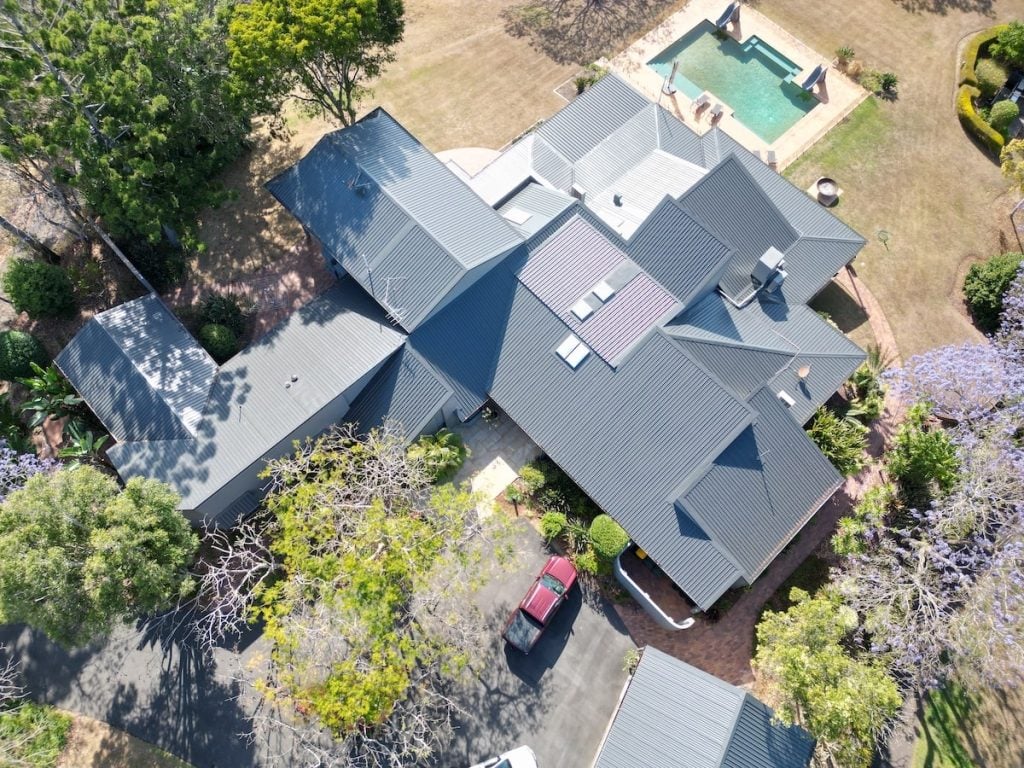
A.M.J Metal Roofing is one of the most experienced metal roofing contractors in South-East Queensland. When it comes to hail damage, our track record and credentials give Brisbane homeowners confidence in the repair process:
- 7,000+ re-roof projects completed across Brisbane and SEQ
- 4.8-star Google rating from verified homeowners
- QBCC Licence 120 2330 | NSW Licence 266396C
- 50+ years combined experience across our team of roofing experts
- 10-year written workmanship warranty on full roof replacements
- BlueScope Steel manufacturer warranty up to 45 years on eligible products
- Roof inspections with detailed reports formatted for insurance claims
Whether the hail damage calls for a targeted repair or a full roof replacement, A.M.J manages the job from inspection through to completion, including insurance assessor liaison and warranty handover.
Has your roof been hit by hail? Call 1300 12 ROOF (1300 127 663) for a free inspection. We’ll assess the damage, provide a report for your insurer, and carry out the repairs once your claim is approved. You can also request a quote online.
FAQs About Hail Damage Roof Repair and Insurance
How do I know if my roof has hail damage?
Look for dents in metal roofing, gutters, and downpipes. Inside your home, water stains on ceilings and walls after a storm are a strong indicator of roof damage. Many forms of hail damage aren’t visible to the untrained eye, so a professional roof inspection by a licensed roofing contractor is the most reliable way to assess the full extent.
Will insurance pay for hail damage to a metal roof in Australia?
In most cases, yes. Home insurance covers sudden and accidental hail damage, provided the roof was in reasonable condition before the storm. Your insurer will send an insurance assessor to confirm the damage was caused by the hail event and not by pre-existing wear and tear or poor roof maintenance. Queensland has a high approval rate for storm related hail damage claims.
How soon should I get my roof inspected after a hailstorm?
As soon as possible. Delaying an inspection allows minor damage to worsen, particularly if rain follows the hail. Prompt inspection also strengthens your insurance claim, as insurers expect homeowners to act quickly. Most insurance policies require claims to be filed within 30 to 60 days of the event.
Can hail damage a Colorbond roof?
Yes. While Colorbond is durable and weather-resistant, large hailstones can dent the metal panels, chip the protective paint coating, and damage gutters, flashings, and ridge capping. Once the coating is compromised, the exposed steel becomes susceptible to corrosion. Hailstones over 2.5cm can cause visible denting on Colorbond roofing, and stones over 5cm can cause severe damage including potential punctures.
Should I repair or replace my roof after hail damage?
That depends on the extent of the damage. If the hail has affected a small section with isolated dents, targeted repairs are the right approach. If the damage is widespread, covering more than half the roof, or if the structural integrity of the roofing material is compromised, a full roof replacement is the better investment. A.M.J Metal Roofing will assess the damage and recommend the most appropriate course of action based on what we find.
What does a hail damage roof inspection involve?
A professional inspection involves examining the entire roof surface for dents, cracks, displaced components, and coating damage. The roofer will also check gutters, downpipes, flashings, ridge capping, vents, and any roof penetrations like skylights or solar panel mounts. Inside the roof space, they’ll look for signs of water entry, damp insulation, and structural damage to battens and rafters. The inspection is documented with photos and a written report that supports your insurance claim.
How long do hail damage roof repairs take?
Minor repairs on isolated sections can be completed in a day or two. Moderate repairs involving sheets across a larger area may take two to four days. A full roof replacement after severe hail damage takes approximately one week including scaffolding setup and removal.
Can I claim hail damage on my roof if the roof is old?
You can lodge a claim, but the outcome depends on the roof’s condition before the storm. If the assessor finds that the roof was already deteriorating due to age, wear and tear, or poor maintenance, the insurer may attribute some or all of the damage to pre-existing conditions rather than the hailstorm. Keeping records of annual inspections and ongoing maintenance is the best way to demonstrate that your roof was in good condition before the event.


